For media enquiries, email press@multiverse.io
Our media kit contains free to use images, including our logo and headshots of our leadership team.
Media Centre

Multiverse in the news

Bloomberg
Bloomberg
Euan Blair: AI Transition Needs An 'All In' Approach
It's clear Artificial Intelligence will transform the way we work. But how should workers - and their employers - position for success? Euan Blair, the CEO of upskilling platform Multiverse, says the key is to go 'all in' on AI. Blair spoke to Tom Mackenzie on "Bloomberg Tech: Europe."


Our recent announcements
Thank you! Your submission has been received!
Oops! Something went wrong while submitting the form.

Multiverse and Synthesia partner to drive AI adoption across the workforce
News
Team Multiverse
Multiverse, Europe’s only EdTech unicorn, announced a partnership with Synthesia, the world’s leading AI video communications platform.
Under the partnership, Synthesia’s AI video platform will be formally integrated into Multiverse’s AI Learner Toolkit - a suite of tools its learners can explore to scope, build and deliver AI projects inside their organisations. Learners across Multiverse’s programmes will now have additional resources and guidance to implement Synthesia as a tool to design and deploy AI video solutions for their employers, alongside a range of other no-code, low-code and generative AI tools.
Learners have already begun applying Synthesia independently to drive real business impact across industries:
- Two local government learners deployed Synthesia to meet high-demand content needs - one halving production time entirely, another creating accessibility-compliant resident communications that shifted service delivery from assisted to digital channels
- A customer operations professional at an insurance company redesigned training for vulnerable customers, replacing manual live delivery with standardised AI-generated video modules - improving consistency, reducing workload and strengthening auditability
- A programme director at an international real estate company is using Synthesia to produce multilingual training materials at scale, replacing text-based content with engaging video, without the time and cost of traditional filming and voiceovers
The partnership formalises an existing relationship. Synthesia is already embedded in Multiverse’s own learning content, used to produce AI-powered video at scale across its programmes. This capability allows Multiverse to deliver dynamic, multimodal content that can be updated in real time, keeping pace with rapid technological advances. By blending this cutting-edge AI with its signature human coaching, Multiverse creates an AI-powered, human-led learning experience.
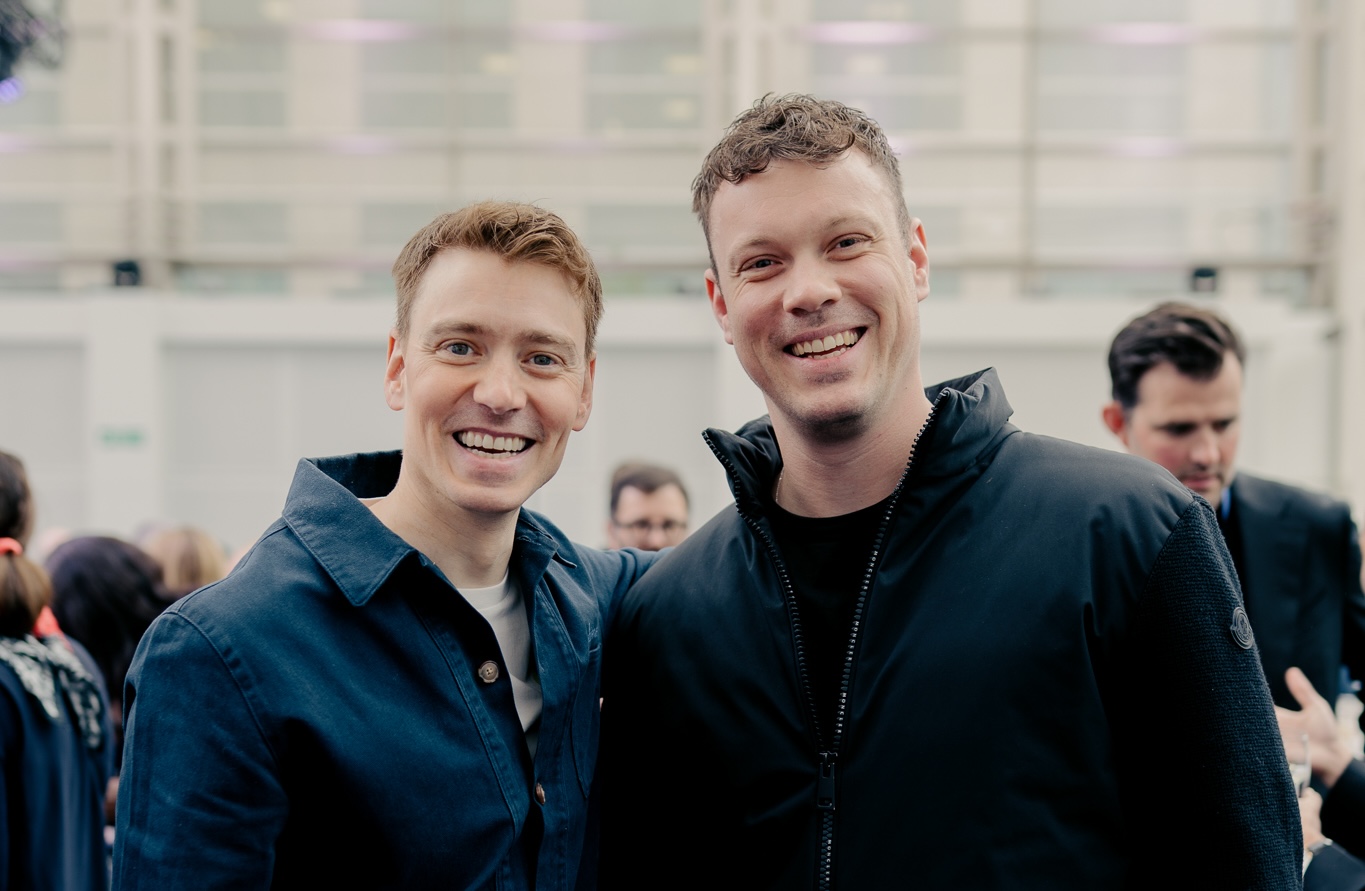
The announcement was first made at Synthesia Live London, where Multiverse CEO Euan Blair joined Synthesia CEO Victor Riparbelli for a fireside conversation on AI adoption and the future of workforce transformation.
Euan Blair, Founder and CEO of Multiverse, said: “The true power of AI occurs when brilliant tech meets human capability. Together with Synthesia, we are turning that vision into reality, putting world-class video AI straight into the hands of our learners to become creators and innovators. They are finding the real-world use cases that improve productivity and create tangible outcomes. And this is how widespread AI adoption actually happens.”
Victor Riparbelli, Co-founder and CEO of Synthesia, said: “We’re at a rare inflection point: AI is becoming genuinely capable, and at the same time, upskilling and reskilling workforces is now a board-level priority. The question isn’t whether organisations need to transform - it’s how fast they can build the human capability to make it real. Synthesia and Multiverse sit at exactly that intersection. Embedding Synthesia into Multiverse’s programmes means tens of thousands of learners will learn to create, communicate and share knowledge, enhanced by AI.”
The partnership reflects a shared conviction that AI can supercharge what humans are able to achieve. With more than 30,000 learners across the UK, Multiverse works with employers across financial services, public services, professional services and beyond to equip workforces with the practical AI capability needed to compete. Synthesia’s platform is used by more than 65,000 businesses globally, including 90% of the Fortune 100.

RSK launch new AI Academy with Multiverse to unlock AI-driven efficiency across 200+ businesses
News
Team Multiverse
RSK has launched a strategic partnership with upskilling platform Multiverse to train an initial cohort of 33 employees in advanced AI applications. The partnership is designed to support RSK’s ongoing emphasis on innovation and technological advancement.
With more than 200 businesses, RSK Group will benefit from AI fluency across core functions and divisional teams. By empowering staff to embed advanced AI capability to support their work, teams can shift their focus to the strategic, high-value work that drives revenue.
Gary Eimerman, Chief Learning Officer at Multiverse, said: "We’re proud to partner with RSK, turning AI literacy into a shared language across its businesses. This mastery of AI will serve as a force multiplier, allowing teams to unlock hidden efficiencies and scale their impact. Together, we’re building a future-proof foundation that supports RSK as the group continues to find solutions to complex environmental challenges."
Dr. Ian Goodacre, Group Divisional and Board Director at RSK, said: “At RSK, our strength lies in our vast, multi-disciplinary expertise. This partnership with Multiverse is about empowering our people to harness that collective intelligence. AI support will allow our teams to focus on the high-value, creative problem-solving that helps us achieve efficiencies, stay competitive and continue to deliver outstanding results for our clients."
The 33 learners are enrolled across three programmes with Multiverse’s AI portfolio:
- AI Strategy and Leadership, Level 5: Designed for leaders to align AI initiatives with specific business areas and broader strategic goals.
- AI for Business Value, Level 4: Empowers teams to identify and implement tailored AI solutions that drive measurable business impact, focusing on process optimisation.
- AI-Powered Productivity, Level 3: Boosts team productivity by integrating GenAI tools into daily tasks to automate repetitive workflows and drive measurable efficiencies.
This partnership is part of an important step in RSK’s digital transformation. In fostering a culture of mastery and technological confidence, RSK is positioning its team to navigate the accelerating pace of the global working world and solve complex client problems with innovative, bold solutions.
Multiverse raises $70 million to become Europe's AI adoption platform
News
Team Multiverse
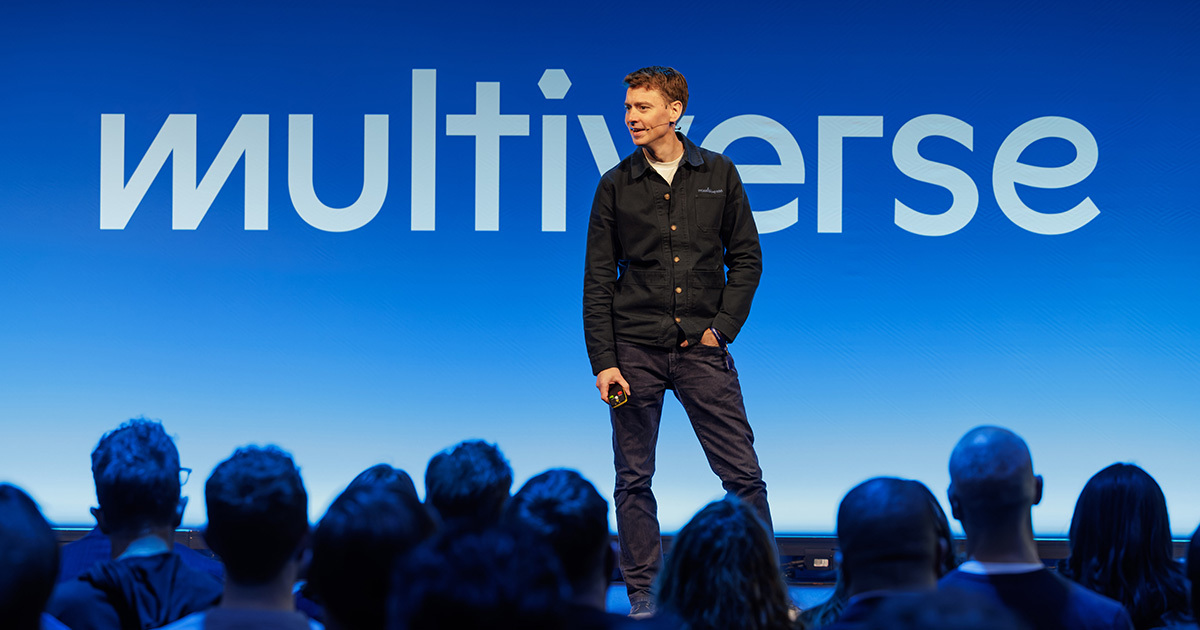
LONDON – 15th May, 2026 – Multiverse, the upskilling platform for AI and tech adoption, today announced it has raised $70 million in primary funding to drive growth across Europe. The funding was led by Schroders Capital, with participation from existing investors including General Catalyst, Lightspeed Venture Partners, D1 Capital Partners, Index Ventures, Bond, and StepStone Group.
The investment will accelerate Multiverse's expansion across Europe, with the goal of ensuring that AI benefits the workforce, rather than displacing it. It lands amid accelerating company growth driven by UK enterprise adoption, and strategic acquisitions. Multiverse completed the acquisition of Berlin-based data and AI training company StackFuel in January 2026.
The $2.1bn valuation, a $400m increase on the last funding round, reflects a company in its strongest position yet: revenue grew 50% yoy, and increased at an accelerating rate for the third consecutive year. For the first time, Multiverse had a cash-positive quarter from January to March 2026. Alongside this raise, all employees regardless of seniority have been offered equity and a long term stake in the company as a result of the funding round.
Defining a new category: the AI adoption layer
Businesses and governments across the UK and Europe are investing heavily in artificial intelligence, with AI spend doubling since last year according to BCG’s 2026 AI Radar. Yet the much promised productivity gains remain elusive. The missing ingredient is not more technology tools, it is a skilled workforce capable of deploying them. Corporate AI trailblazers in the BCG report invest twice as much in upskilling their workforce as AI followers.
Multiverse was built to ensure workers don’t get left behind by the rapid pace of technology. Today that means closing the gap between workers and tech, in effect acting as the AI adoption layer of the technology stack. Its platform diagnoses precise skills gaps, matching corporate goals against workforce capability to give leaders a holistic view and detailed recommendations for upskilling. Multiverse then equips workers at every level with the AI, data and digital skills to translate technology investment into measurable outcomes. To date, the company delivered more than £2 billion in verified ROI for over 1,000 employers, including critical national security with Babcock and household names like The AA, Capita and Addison Lee.
With 50% revenue growth last year, driven by new customers and continued demand from existing customers the strategic investment is intended to fuel further expansion. The last year has seen an increasing focus on strategic alliances, with tech platforms including Microsoft, Palantir, and Databricks partnering with Multiverse. Atlas, its AI coaching platform, tripled daily active users in the last year.
"There are companies who desperately need the benefits AI can bring. There are AI companies. What has been missing is the layer that bridges the two," said Euan Blair, CEO and Founder of Multiverse. "This investment marks the moment Multiverse defines that category, and takes it across Europe. Getting outcomes from AI and unlocking productivity is not just a technology problem. It is a people problem. We exist to solve it."
Multiverse's thesis, that AI's greatest value lies in expanding human capability, not replacing it, is drawn from extensive employer experience. CEOs surveyed by Multiverse cited skills gaps as the second biggest barrier to AI adoption, ahead of regulation and data quality.
Chancellor of the Exchequer Rachel Reeves said: “We want Britain to achieve the fastest rate of AI adoption of any country in the G7 - the productivity dividend we can get from AI will grow businesses of all shapes and sizes in the UK and ensure they stay competitive.”
“Multiverse is a fantastic example of a British company helping turn that ambition into reality. This investment will support its expansion across Europe, strengthening a UK firm that is competing globally and equipping people with the skills to make AI work in practice.”
Michael Mclean, Head of Private Equity Technology Investments, Schroders Capital, said: “The evolution of AI is creating transformative opportunities to drive productivity and growth across global economies,” “Multiverse is a leader in enabling this shift, helping organisations capitalise on these tailwinds. With growing momentum across Europe, Multiverse puts the focus on AI adoption, enabling employers to upskill their workforces and translate technology investment into tangible outcomes.
"High-quality businesses with the potential for transformative, sustainable growth and value creation are key fundamentals we look for. We're therefore delighted to have led this significant fundraise as Multiverse further accelerates its growth journey."
Growth has been driven in large part by deepening business with existing customers.
Lynsey Valentine, Strategy Director at Babcock, said: “Multiverse has helped us tackle a growing complexity and volume of data by equipping our people with practical, real‑world data skills. Our teams are already applying what they’ve learned to automate processes, unlock insight, and drive meaningful improvements well before graduation.”
Lisa Pinfield, Group Director of Performance & Development at Capita, said: “At Capita, we chose Multiverse because they enabled us to build critical AI and data capability at scale, in a way that is practical, inclusive and closely aligned to real business needs. The partnership has helped us turn AI ambition into real impact, equipping colleagues with future‑critical skills while strengthening performance and decision‑making across the organisation.”
Patrick Gallagher, CEO at Addison Lee, said: "We are delighted with the impact of our partnership with Multiverse, which plays a vital role in Addison Lee’s ongoing digital transformation. It has been incredibly rewarding to see our colleagues at every level of the business respond with such resounding positivity toward this opportunity to learn and progress. As we navigate an increasingly complex and rapidly changing landscape, this collaboration ensures our workforce remains equipped with the essential skills to drive our business forward."
Sorry, no results found.
We couldn’t find what you are looking for. Please try another way.

About Multiverse
Multiverse is the upskilling platform for AI and tech adoption. Multiverse has partnered with over 1,500 companies to deliver a new kind of learning that’s transforming the workforce through tech skills.
Multiverse apprenticeships are for people of any age or career stage and focus on critical AI, data and tech skills. Multiverse learners have driven $2bn + ROI for their employers, using the skills they’ve learned to improve productivity and measurable performance.